

As a core technological breakthrough by HTD (Hongneng) in the new energy field, our launched busbar thermal runaway protection solution aims to provide customers with the perfect balance of high conductivity, high thermal safety, and reliability. Through material innovation, structural optimization, and process innovation, HTD has successfully addressed the challenge of thermal runaway protection for busbars under extreme conditions, achieving a comprehensive improvement in safety performance.
HTD employs high-purity oxygen-free copper and copper-aluminum composite materials to replace traditional conductors. By optimizing material formulations and surface treatment processes, the busbar's continuous operating temperature rating is elevated to 180°C while ensuring excellent electrical conductivity. Simultaneously, mica-based composite insulation materials are applied to maintain short-term insulation performance above 800°C under thermal runaway conditions.
HTD Structural Design: Optimization of Heat Diffusion and Isolation
HTD utilizes thermal simulation analysis and topology optimization algorithms to redefine the busbar's heat dissipation structure. The traditional planar heat dissipation design is upgraded to a composite structure of three-dimensional fins and microchannels, increasing the heat dissipation area by over 30%. Through bionic heat flow path design, directional heat diffusion and rapid isolation are achieved during a thermal runaway event, preventing chain reactions.
HTD Connection Process: Low Thermal Resistance Connection Technology
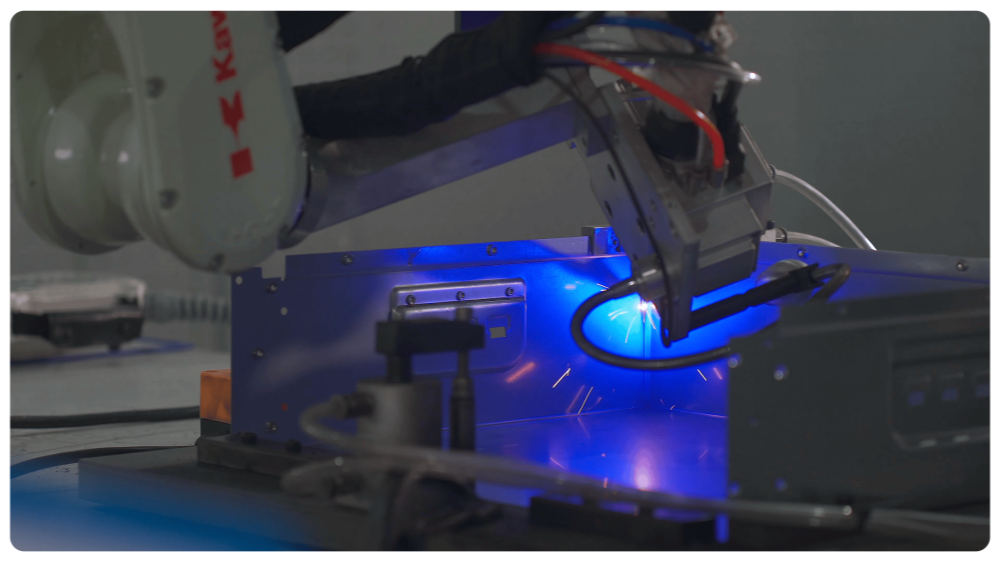
For busbar system connections, HTD adopts advanced processes such as laser welding, diffusion welding, and precision crimping. These processes achieve low resistance and low thermal resistance characteristics at the connection interface while avoiding contact issues and local overheating associated with traditional bolted connections. HTD's welding processes also enable high-strength connections between dissimilar materials, accommodating complex thermal expansion requirements.
HTD Insulation Design: Multi-Layer Protection System
HTD innovatively develops a composite insulation system combining PPS injection molding and mica tape winding. By optimizing insulation layer thickness and material combinations, the temperature rating is significantly improved while ensuring electrical safety. Furthermore, using a ceramicized silicone rubber coating forms a ceramic protective layer under extreme high temperatures, achieving self-recovering insulation performance.
HTD Thermal Management Integration: System-Level Thermal Protection
HTD adopts a deeply integrated solution combining busbars with the battery thermal management system. By optimizing busbar layout and coordination with cooling channels, efficient heat extraction is achieved. Phase Change Materials (PCM) are utilized at critical busbar nodes to absorb instantaneous thermal shocks. Combined with BMS intelligent monitoring, millisecond-level response to thermal anomalies and active protection are realized.
HTD Stamping and Molding Process: Integrated Forming Technology
HTD applies core processes of precision stamping and injection molding to achieve lightweight and high-performance busbar components. The stamping process can produce copper-aluminum busbars with complex heat dissipation structures, with tolerance control of ±0.05mm. The injection molding process enables integrated forming of copper bars and insulation layers, ensuring a sealing rating of IP67 or above. Notably, the pre-placed mica tape injection molding technology allows for stable mass production of high-temperature resistant insulation.
HTD Quality System: Thermal Safety Verification
HTD has established a comprehensive thermal safety product verification system, including thermal simulation analysis, temperature rise testing, and thermal runaway testing. Multi-physics field coupling simulation optimizes busbar thermal design. Bench tests such as high-current temperature rise and local overheating verify thermal performance reliability. Finally, module-level thermal runaway testing ensures the safety protection capability of the busbar system under extreme conditions.
HTD (Hongneng) is committed to providing safer, more reliable, and more efficient busbar thermal runaway protection solutions for new energy vehicles through continuous technological innovation, helping customers enhance their product safety competitiveness.


